The incline bench press is arguably the best upper body exercise for achieving a strong, developed chest. In contrast to the flat bench press, the incline press targets your upper chest and shoulders, making it a good way to achieve that strong, athletic appearance most lifters are after. Yet this exercise may be perplexing at first. What is the proper angle? Which muscles are actually contracting? How can you prevent injury? In this guide, we’re going to take everything you want to know about the incline bench press and break it down into simple, plain human terms. No techie talk or complicated anatomy — just plain old advice, tips, and results.
What is the Incline Bench Press?
The incline bench press is a variation of the standard bench press done on a bench angled — typically between 30° to 45°. This angle brings more tension into your upper chest (clavicular head of the pectoralis major) and front shoulders (anterior deltoids). You can do this exercise on a barbell, dumbbells, or even on a Smith machine — all with slightly varying benefits. No matter your equipment, the incline bench press is a great tool to enhance both aesthetics and strength in your upper body.
Muscles Engaged in the Incline Bench Press
- Upper Chest (Clavicular Pectorals)
- Front Shoulders (Anterior Deltoids)
- Triceps (Triceps Brachii)
- Serratus Anterior (Side of the chest)
- Compared to the flat bench press, the incline bench press places less stress on the lower chest and more on the shoulders and upper chest. This makes it a perfect exercise for anyone seeking to develop symmetrical upper-body strength.


How to Execute the Incline Bench Press: Step by Step
Let’s be straightforward. Here’s precisely how to do the incline bench press correctly:
1. Position the Bench Angle
Put the bench on an angle of 30° to 45°. anything higher than 45° makes it a shoulder press — and we don’t want that here.
2. Lie Down and Position Your Body
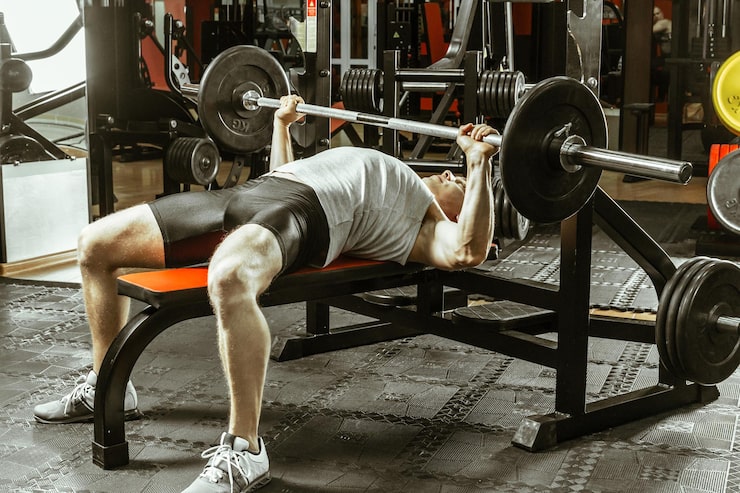
Lie on the bench with feet planted firmly on the ground. Pull your shoulder blades back and down to protect your shoulders and engage your chest. A slight natural arch is maintained in lower back.
3. Grip the Bar
Take a grip on the bar slightly more than shoulder-width apart. Wrists straight. Thumbs wrapped around the bar. Keep from bending your wrists back too far.
4. Lower the Bar to Your Upper Chest
Breathe deeply, then lower the bar slowly to just below the collarbones. Hold your elbows at a 45° angle — not flared out to the sides or pulled back too close.
5. Press the Bar Up
Press the bar back up by pushing through your palms and squeezing your chest. Press out on the exhalation. Lock your elbows but don’t lock them out too far.
Incline Bench Press Benefits
Develops the top chest for a more sculpted and defined body. Helps posture by tightening the front of your shoulders and chest. Assists overall bench press strength by building top-end pushing strength. Helps shoulder stability when executed with good form.
Incline Bench Press Variations
Incline Dumbbell Press: Allows more range of motion and tests stability. Incline Smith Machine Press: Bar path controlled for beginners or rehabilitation. Incline Close-Grip Press: Hits triceps and inner chest harder.
Mistakes to Avoid
Too steep incline angle: Reduces it to a shoulder press. Flaring elbows too wide: Stresses out the shoulder joints. Bouncing bar: Increases injury risk and minimizes muscle activation. Partial range of motion: Always come down to touch your chest (in a safe manner).
How to Program Incline Bench Press in Your Routine
You can perform incline bench press in your workout 1–2 times a week. Here’s how based on your needs:
For Muscle Development (Hypertrophy): 3–4 sets of 8–12 reps For Strength: 4–5 sets of 4–6 reps with heavier weights For Endurance: 2–3 sets of 15–20 reps with light weight
Incline Bench Press for Burning Fat?
Although the incline bench press in itself won’t burn fat, it does contribute to gaining lean body muscle. The greater the muscle mass you gain, the higher the number of calories burned at rest. Pair incline pressing with cardio and a controlled diet and you’ll enjoy quicker fat loss. Want to accelerate fat loss? Read this strong guide on how to lose belly fat in 7 days.
Do You Use Barbell or Dumbbells?
Both have their uses:
Barbell: Good for lifting heavy weight and monitoring strength gains. Dumbbells: Excellent for fixing muscle imbalances and extending range of motion. Do both where possible — barbell for power, dumbbells for balance and stretch.
Safety Considerations for Incline Bench Press
Warm up shoulders and rotator cuffs prior to heavy sets. Have a spotter when lifting heavy with a barbell. Control the movement — do not jerk or bounce. Pause if you experience shoulder discomfort — change to dumbbell or machine press. Last Thoughts: Why the Incline Bench Press Deserves a Place in Your Program The incline bench press is a should-do exercise for developing a larger upper chest, stronger shoulders, and improved posture. It’s easy to master, very effective, and infinitely variable in terms of accommodating various goals and fitness levels. Use it consistently in your workouts, apply proper form, and combine it with good nutrition — and you’ll be on your way to a stronger, more impressive upper body.
Want more fitness tips and science-backed guides? Explore Muscles and Motivation to power your transformation.